Not for all of them. Take Medicaid for example. If you go over the threshold (here $43k for married couple) for qualifying for it, at $50k AGI, you’d still qualify for 95% ACA subsidies bringing your monthly bill to less than $100/month for two adults. Even after that extra expense, you’d still be left with more money than if you earned less than the threshold.
1 Like
This is good to know, but ACA subsidies get you on a plan from the exchange, which is not the same as Medicaid, right? I have a feeling that even if they provide the same coverage, the ease of finding a provider may not be the same.
Plus the $8-10,000 deductible before anything is covered. ACA coverage, especially bronze plans, is not comparable with Medicaid.
1 Like
Yes. Medicaid essentially has a zero deductible. To the truly poor, switching to an ACA plan with even modest deductibles and co-pays is going to seem like a hardship.
My lowest silver plan with the subsidy is gonna seem gold plated compared to an employer plan, but expensive compared to completely free, lol.
1 Like
It doesnt require being truly poor.
My sister and myself took custody of a child last year. While I provide most of the financial support, my sister claims her as a dependant - solely because then she (the child) remains eligible for Medicaid, while if my dependant I’d need to add her to my ACA plan. It’d cost me well over $1,000 net (higher premiums less higher ACA subsidy), and that is without any medical costs paid towards the $8,000 deductible, that medicaid will cover from the first dollar. On my ACA plan, her having a simple broken bone or anything beyond routine dental care would in fact create a burdon.
Extra bonus is that having a larger family allows my sister to earn more without falling off the eligibility cliff.
Note: This is Medicaid for children only, which has surprisingly high income limits especially with a larger family. Medicaid coverage of adults is much, much more restricted.
Hot tip: if you get DCS/CPS to take the child away from her parents, then you take her in as a foster, foster children get Medicaid (until 18 or 26?) regardless of the foster parents’ / carers income. Foster parents also collect an untaxable monthly “stipend.”
True. Nothing will be as good as free. Although the sub-$100/month silver plan I picked came up with a total estimated annual cost of just over $4k for a couple with moderate medical needs (healthcare.gov definition). Obviously, it’s not as cheap as Medicaid but not totally an insurmountable cliff, especially if younger and healthier.
Not to say that it couldn’t be improved. I could see extending Medicaid to higher incomes but with the addition of income-tiered premiums (similar to IRMAA for Medicare) to somewhat bridge the cost gap to the cost of ACA plans. But considering the costs of current Medicaid, I’m skeptical there’ll be a political will to do much except cut it further than it already just was.
That’s actually where we were heading. Then bio-dad crawled out from under his rock after 8 years and started making threats, CPS was indulging him since their case was against the current guardians not him, so I went to court to bypass CPS and got emergency custody (now permanent). It would’ve been better to let foster care run it’s course, but I didnt trust CPS to pick the right side and we were all sick of their ‘checklist oversight’ anyways (so many meetings just to check off a few boxes on a list). Plus, stipends are only paid to certified foster parents; while we had been approved as kinship placements, getting foster care certified would’ve been tough due to a couple technical requirements.
Trust me, I explored all the options. But thanks, it is a tip worth spreading.
1 Like
Interesting on the Biden era expansions of Obamacare and how there are lots of subsidies even for rich people to buy these plans. Here’s a pitch to let the extra covid era subsides expire.
https://www.wsj.com/opinion/let-the-obamacare-enhanced-premium-subsidies-expire-16ef7e1b
https://archive.is/CobXM
Simply put, since 2021, Congress has been bribing higher-income Americans to purchase expensive ObamaCare plans by hiding the plans’ true price tags using taxpayer dollars. Premiums have increased by nearly 80% since 2014 and more than doubled since 2011. They are projected to rise another 15% to 20% next year. Despite record taxpayer spending on premium subsidies—exceeding $130 billion annually—enrollees still pay average deductibles of $5,000 and out-of-pocket maximums of $21,000 while 1 in 5 of their medical claims are denied. Without Covid-era premium subsidies, these plans would hold little appeal to consumers.
Why are ObamaCare plans so unaffordable? The inflationary provisions of the Affordable Care Act—such as the medical loss ratio, mandated “essential” benefits, community rating and premium subsidies—have inhibited insurers from offering affordable and flexible options. The law’s regulatory burdens on providers have also fueled consolidation and driven up service prices. These structural flaws have long been recognized and are a major reason why the ACA, the American Rescue Plan and the Inflation Reduction Act have all failed to gain bipartisan support.
By luring people to these expensive plans and making them dependent on subsidies, lawmakers not only wasted taxpayer dollars and invited fraud but also effectively killed the market for affordable alternatives. Continuing this scheme would be fiscally reckless and irresponsible to consumers. Covid-era subsidies should be allowed to die a natural death.
3 Likes
Now they’re talking about a one-year extension in order to resolve the government freeze. It’s worth potentially a few thousand bucks to me, but it’s really just kicking the can down the road until after the election.
When has Congress not just kicked the can as far as budget/appropriations are concerned? How many times was an actual budget passed on time? 4 times in over 50 years. Last budget passed on time was nearly 30-years ago. /sigh
This shutdown is for a 7-weeks continuing resolution, itself a stop-gap measure in case a proper budget could not be passed in time. Now all they do is kick the can via CRs. We’ve averaged 5 CRs per year since 1974, some nearly full year CRs. And since they obviously don’t prevent shutdowns, maybe it’s time to get rid of that cheat and actually pass budgets on time for a change.
Personally, I think we should let these ACA extended subsidies expire as planned, at least not without measures (spending cuts and/or tax increases) to compensate for its cost. There was time to extend these in the OBBB. It was deliberately left out to pass it via reconciliation. Now Dems (and some GOP) want to add it back in without balancing its cost? And to boot by a 1-yr extension just to get beyond the mid-terms? How shameless and corrupt can they be?
3 Likes
Dying to have the government control more of your healthcare? Just don’t get declared dead by mistake, then you can only vote Democrat but not get healthcare like this lady.
1 Like
Did I understand right that she did not noticed that her SS checks had stopped for several months until she went to the doctor… 
But not to fear, after underwriting, I’m sure she shouldn’t have trouble finding great creditable coverage on the marketplace as elderly cancer patient using the $185/month she’d save on Medicare B premium… I’d encourage her to do so and not look back to finally not have to rely on government-controlled healthcare.
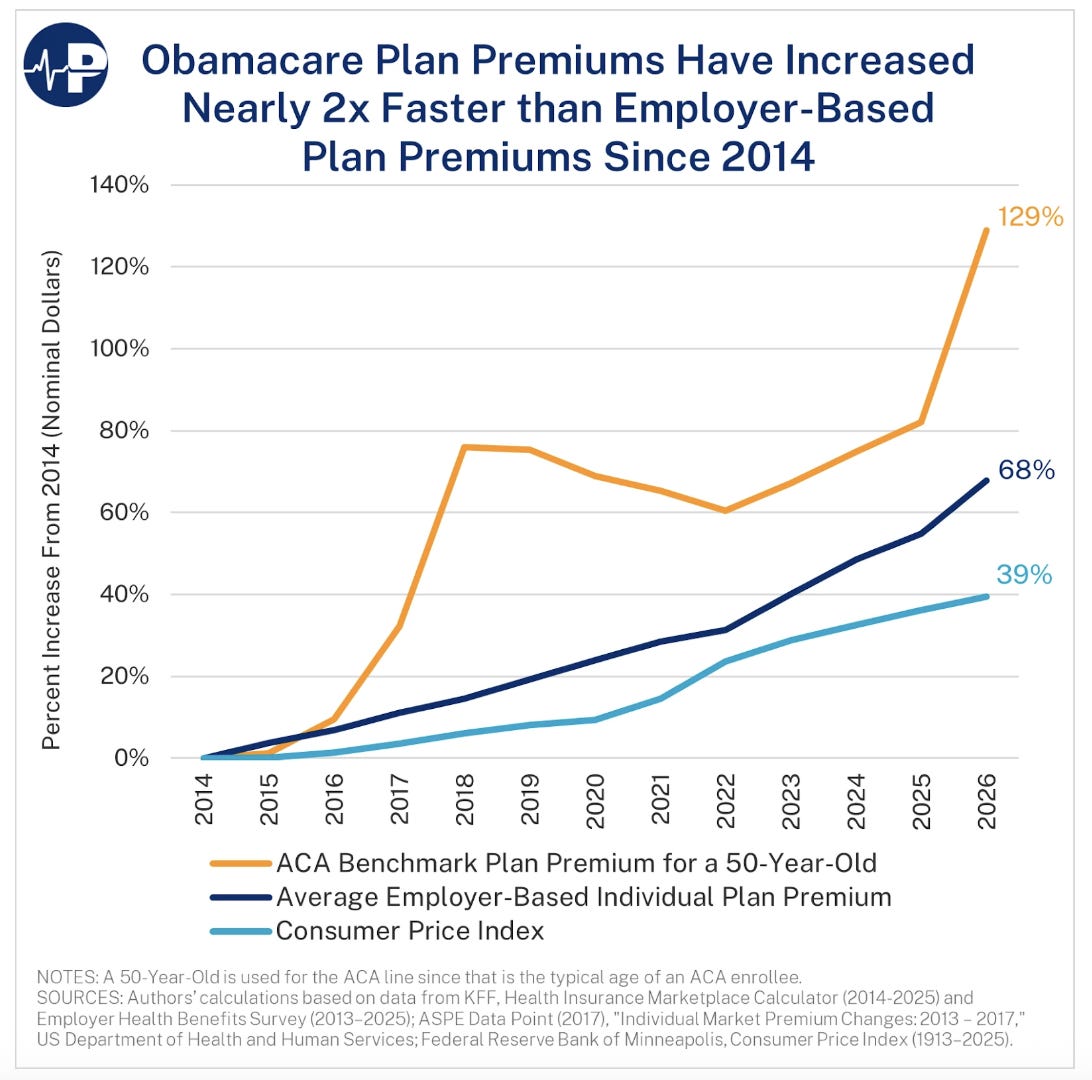
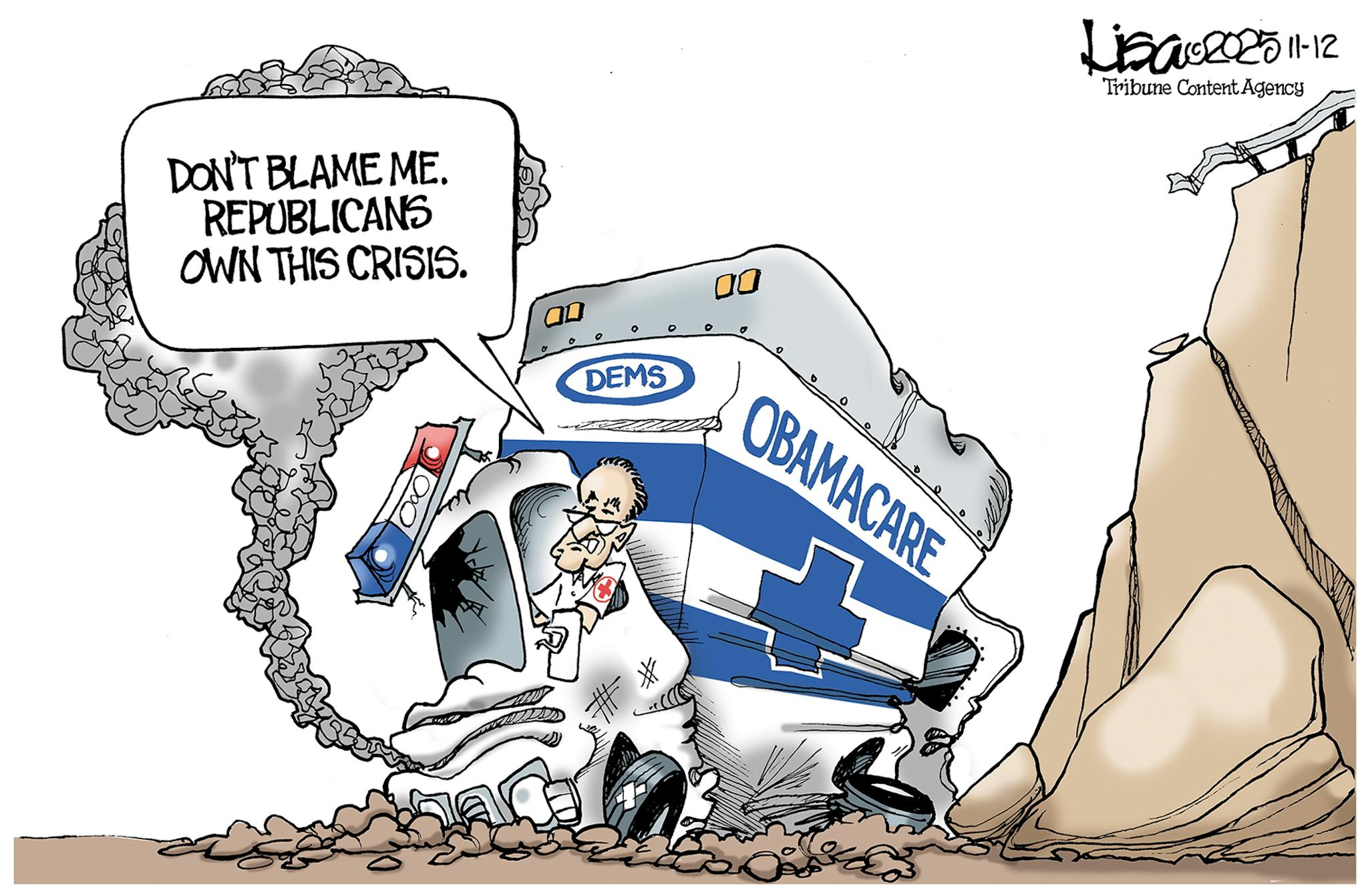
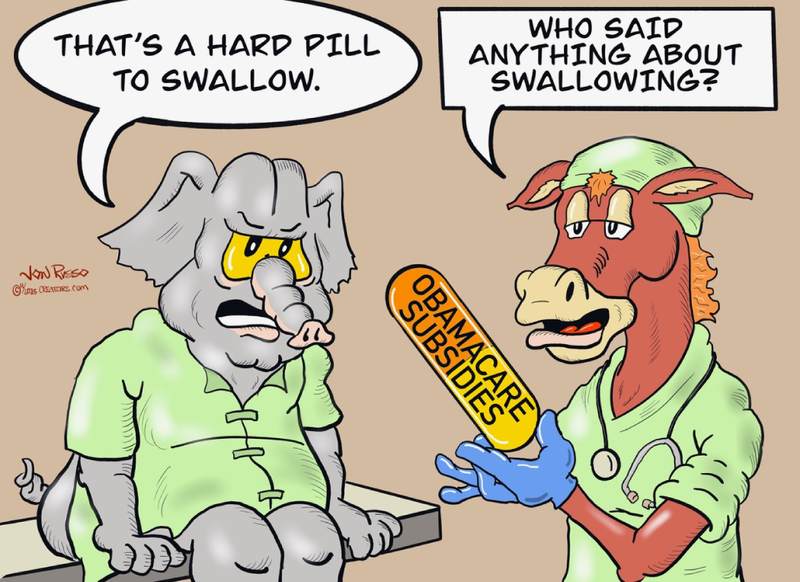
That first chart is telling, because it shoots up 2016-2018, stays mostly flat 2018-2025, then shoots up again.
1 Like
While passed in 2010, the law first took effect in 2014 hence the start of the graph’s timeframe. The first 1-2 years the insurance companies were flying blind in terms of understanding the combination of adverse selection of participants and the impacts of the ACA tax / penalty that healthy people would pay if they didn’t buy expensive ACA plans and help subsidize the “guaranteed coverage” risk pool. That penalty was almost as much as the overpriced Obamacare plans at the time ($15k), so it was expected many would be forced into coverage when their existing plans got discontinued or were too affordable, er, “unqualified”, unless they qualified for a small number of exceptions.
I think this accounts for the slow initial rise that then accelerated after the first 1-2 years when they could reprice their premiums annually. When Trump won in 2016, the writing was on the wall that the tax penalties were going away, although that didn’t take effect until 2018 officially. At that point, everyone knew the risk pool was going to be extra toxic as the self-employed healthy people had no desire to pay 4x their old-but-no-longer-available health care plan costs just to subsidize a bunch of old or sick people, especially when no one else in the country was being asked to kick in (the “Cadillac” plan tax threatened on group plans got killed by the unions before it ever taxed anyone).
Meanwhile, healthcare inflation ran up costs across the board, but as you can see the ACA premiums didn’t rise during 2021-2025 while everyone else’s premiums were rising substantially - my eyeball of the group plan premiums is +50% over those 5 years so around 9-10% annual inflation. This was because of the Biden era ARP Act started extra subsidies for ACA premiums for 2021 and eventually ended in 2025, so that artificially low period is now catching back up to the underlying cost inflation.
1 Like
Everyone did not “know”, they reasonably suspected. I was listening to something recently where an economist who studies this stuff said that this did not actually happen, the risk pool did not worsen even when the penalty went away.
So… the Democrats kept the prices low? And Republicans didn’t renew it? And its the Democrats’ fault? 
“Keeping prices low” isn’t exactly what I’d call spending $2T of taxpayer money in the ARP Act’s signature accomplishment of you look at the inflation that happened in its wake under Biden’s term. Admittedly there was a ton of pork and giveaways in there, not just for ACA subsidies, but my point is you can’t make things affordable by stealing other people’s money to pay for them on a national, aggregate level. Getting the government involved just blows half the money on pork and waste in the process of buying you $0.50 of something for $1 could have bought yourself instead and kept the difference.
As for the politics, the Democrats were in charge and voted for the temporary aspect of these extra covid era ACA subsidies, ending in 2025, so if anything their expiration together with realizing all the shocking inflation that’s gone on during the same time all at once is just a reminder that the Affordable Care Act has been a failure of affordability, as well as quality.
2 Likes
Can’t you though? Isn’t that what we do for medicare, social security, SNAP, section 8, and every other social program? Not much pork and waste in the administration of those.
All the waste is in the fraud, not the administration ? Medicare fraud estimates are 10-20%, over $100B/year.
1 Like